
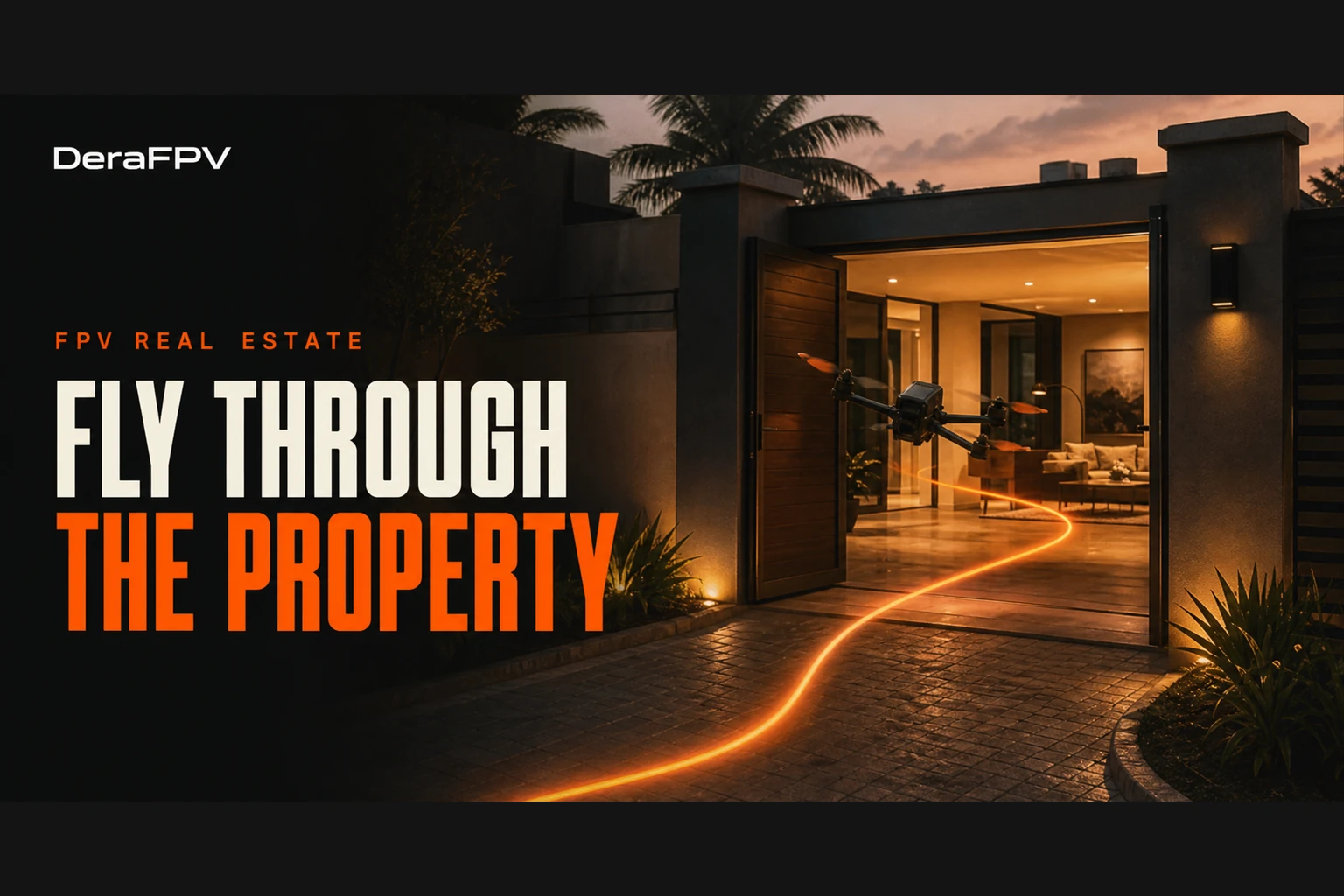
A traditional drone video tells a buyer where a property is. An FPV drone video lets them feel what it's like to arrive, walk in and move through it. Whether you're filming a listing or choosing a drone for property work, that difference is the decision.
Most property videos are slow aerial shots: a rise over the roof, an orbit, a pull back to show the street. An FPV drone video starts at the gate, moves toward the entrance, passes through the door and keeps going through the living room, past the staircase and out onto the balcony, without a single cut.
Why one continuous shot feels different
Buyers experience a home as a sequence: the approach, the entrance, the first room, and the way one space opens into the next. An FPV drone follows that sequence, so the viewer reaches the living room already knowing how it connects to the entrance and the garden.
A video made of separate clips makes the viewer assemble the property in their head. A continuous flight does it for them, and the property reads as one connected place instead of a list of rooms.
That kind of smooth movement through a space is also rare in property marketing, which is what stops a thumb on Instagram, TikTok or WhatsApp. I can't point to Lagos data showing it sells faster, so I won't promise that. What it gives a buyer is the feeling of being inside the property before they visit.
What a traditional drone still does well
A high, steady shot is the right way to show the size of a plot, the layout of an estate, the road access and the surroundings. Land listings and outdoor-only properties are well served by it.
The two work best together: the aerial sets the location, and the FPV flight takes the buyer inside. If the main selling point is land or location, a traditional drone does the job. If it's the interior and how the spaces connect, you want FPV. For a finished home, a show unit or a premium development, film both.
FPV makes the biggest difference on:
- Luxury and finished interiors, where the flow between living, dining and outdoor spaces is part of the value.
- Show units and new developments, where the launch video needs to be worth sharing.
- Properties with a strong exterior-to-interior moment, such as a pool deck opening into an open-plan living room.
If you're choosing a drone for property work
A camera drone built around a stabilised gimbal is made for steady shots from height, not for threading through a doorway. An FPV drone is flown through goggles, so the pilot sees what the camera sees and can fly the route the way a visitor would walk it.
The DJI Avata 2 shows what that looks like at the accessible end. It weighs about 377 g, and its FAQ says it has integrated propeller guards and supports low-altitude, indoor and wooded flying. The same FAQ says it has no obstacle avoidance, only downward and backward positioning, which needs decent lighting. The guards soften a bump, but they don't make a drone safe around people, glass or expensive finishes.
Three things shape the footage and the work behind it:
- Flight modes. Normal and Sport hold the aircraft steady, which suits tight interiors. Manual gives the control that dramatic moves need, but it requires a DJI FPV Remote Controller 2 or 3 and the drone won't hover by itself. I'd build that skill in a simulator first, and I cover how in my simulator guide and controller guide.
- Battery time. DJI lists up to about 23 minutes under its test conditions. A property shoot needs several takes, so plan around several batteries.
- Permissions. What a job needs from the NCAA, airspace authorities and the estate depends on where and how it's flown, and paid work is treated differently from hobby flying. I explain the details in Can You Fly Drones Without a License in Nigeria? and How to Prepare for Your First Drone Flight in Nigeria.
If you're a creator, the order is simulator, then controller, then drone, because the skill takes longer to build than the purchase. If you're a property owner, ask whoever you hire how they'll handle the site, the permissions and the flight route before they arrive.
Want your property to feel like this?
If you're a developer, agent or owner in Lagos and you want a real estate tour or a cinematic drone video that stands apart from the usual aerial clips, get in touch. Tell me about the property, where it is and what you want the video to achieve, and I'll take it from there. Not every property suits an FPV tour, and I'll tell you if yours doesn't.
For questions that aren't about a project, message me on Instagram @derafpv or join the Nigerian drone community on Telegram.